Start with the friction, not with the tool.
The shiniest stack means nothing if it solves the wrong problem. I watch how people actually work, write down where they get stuck, then ship the simplest thing that unblocks them.
I'm Arnaud - Product Ops & AI Automation Engineer. Currently right hand to the founder at HelloBible, scaling from 15k to 140k downloads in 14 months. I find the friction. I ship the system that removes it.
Open to Product Ops & AI Automation roles - coffee on me if you're in Paris
Six case studies - each a real friction I found, a real system I shipped, a real outcome I can show you.

I built a pipeline that translates, assembles, and publishes Bible reading plans on YouVersion. What used to take 50 minutes of manual work per plan now takes about a minute of review and one click to publish. 220 plans shipped, an undocumented API reverse-engineered, an entire publishing-to-acquisition loop automated.
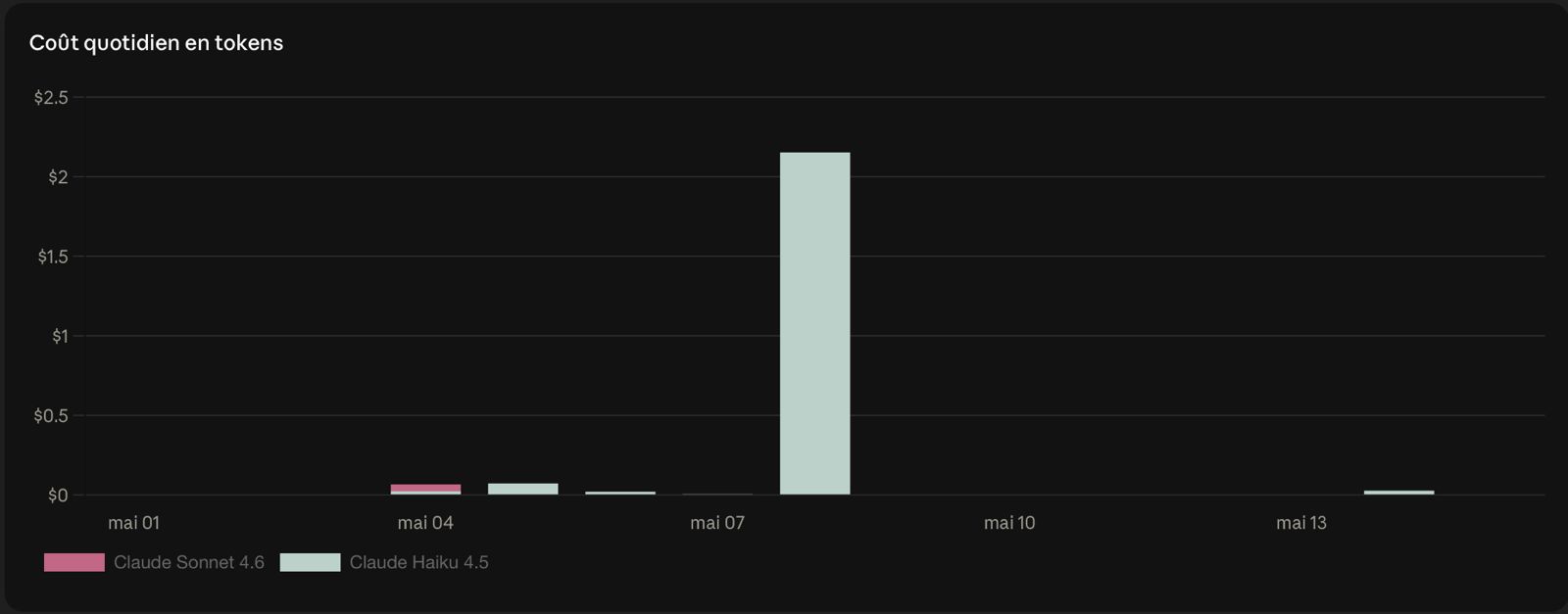
4 scattered feedback channels (Zendesk, WhatsApp, Play Store, App Store) - 2,020 customer verbatims classified across 27 business-specific themes - for ~$2 in API calls. Built with Python and Claude Haiku. Runs monthly from a single command, with checkpoints so an interruption doesn't cost a re-run.
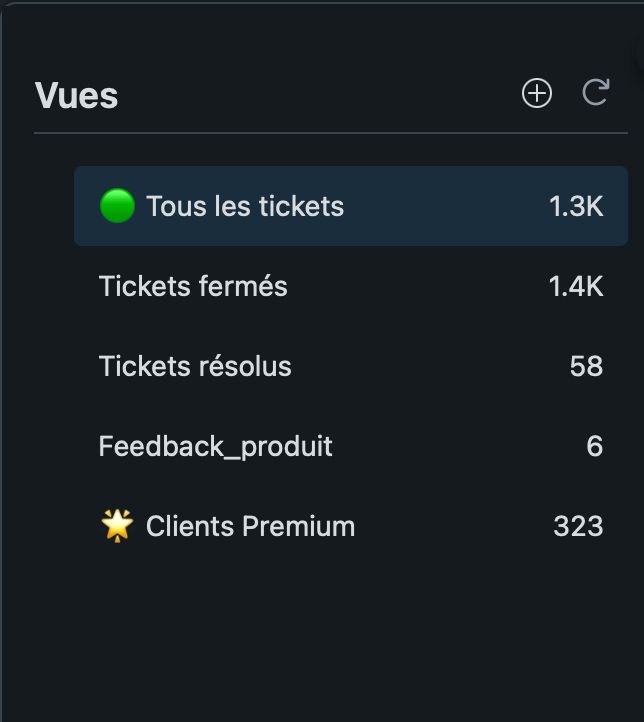
HelloBible was migrating support from a tired Gmail inbox to a properly configured Zendesk. Zendesk's native RevenueCat integration showed who paid, but didn't let us prioritise their tickets in the queue. I built an n8n workflow that scans every ticket, cross-references an exported RevenueCat sheet, and auto-tags premium ones. Result: a dedicated 'Premium Clients' Zendesk view, 323 paying customers triagable at a glance, $0 in API/SaaS costs.
I'm building a pipeline that turns WhatsApp photos of handwritten timesheets into auditable payroll for a 30-store retail chain in South Africa. The admin who runs payroll spends several hours each week on manual entry. Phase 1 (Custom GPT + Excel Engine, semi-manual) is in pilot. Phase 2 (full API automation) planned. Side project, volunteer.
HelloBible's home screen alone gives access to 20+ services - independent user paths with their own logic and edge cases - shipped by an offshore dev team on a weekly release cadence. Throughout 2025 I handled release validation across all services: I wrote the specs, tested every release, and drove the release validation process before each production deployment. The system that made that possible: AI-assisted specs to reduce clarification back-and-forth with offshore devs, a structured Google Sheet test plan covering every service, and three explicit test layers (staging, release candidate, production).
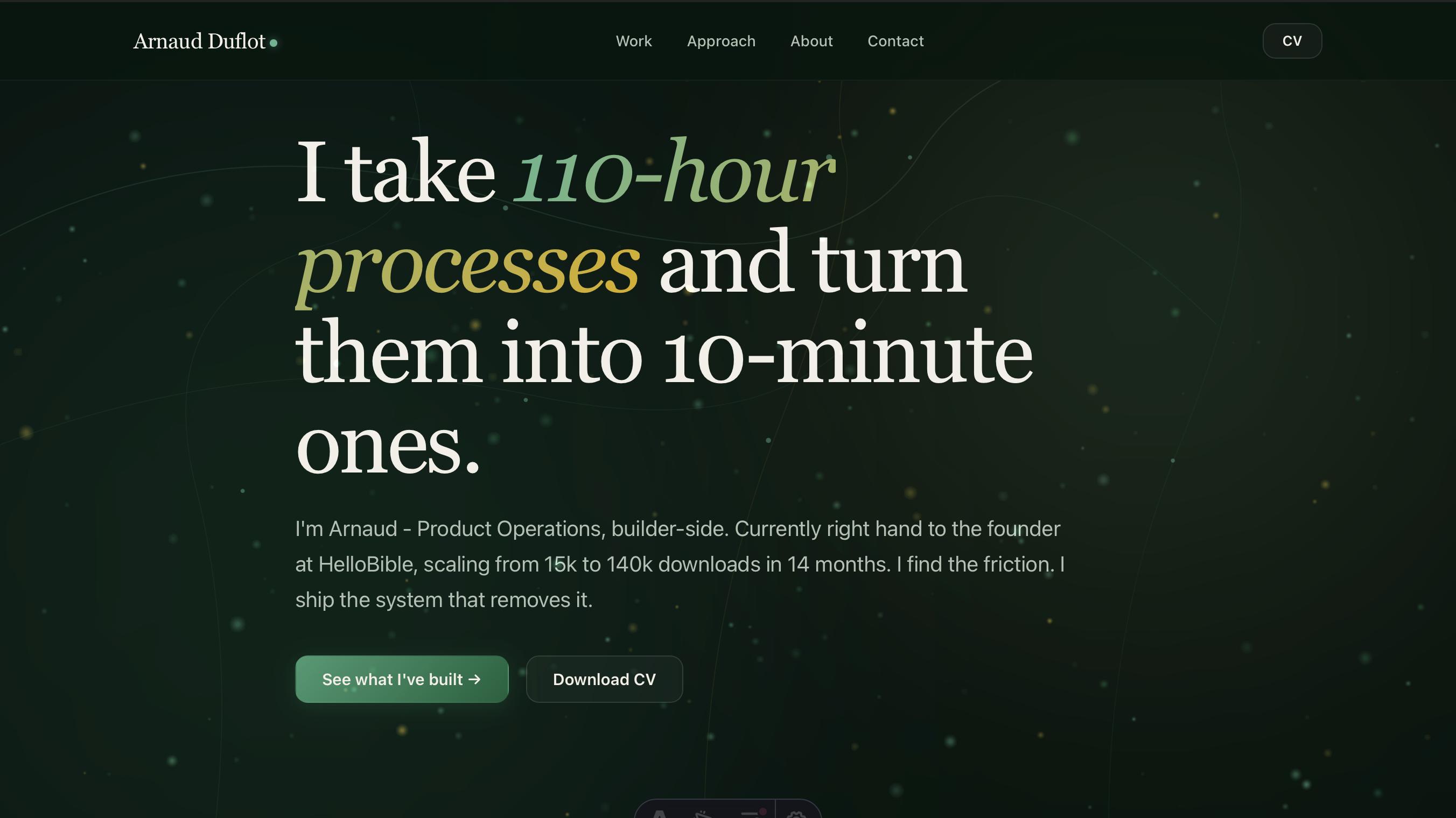
This portfolio is built on Astro, WebGL, Canvas 2D, and a custom SVG animation system. Designed, developed, and deployed in ~2 days using an AI-assisted development workflow. Every architectural decision made by me, every diff reviewed in the terminal, Claude as the execution layer.
The shiniest stack means nothing if it solves the wrong problem. I watch how people actually work, write down where they get stuck, then ship the simplest thing that unblocks them.
Clarity is a deliverable. Every system I ship comes with a short Loom, a one-pager, or a back-of-envelope diagram - because a tool nobody understands won't be maintained, and won't be trusted.
I'll pick n8n over custom code when it gets the job done. Google Sheets over a "real" database when the team is three people. Reliable systems compound faster than clever fragile ones.
I'm Arnaud Duflot. I do Product Ops at HelloBible - a consumer app I helped scale from 15k to 140k downloads in 14 months.
My actual job: I find operational friction, design the AI workflows that remove it, ship. A 50-minute manual task becomes 1 second because I built the right pipeline.
This site exists for one reason: generate 1 to 2 conversations a month with founders or CPOs who have the same problems I have at HelloBible, at different scales. Early-stage startup, scale-up structuring its ops, AI team inside a larger company - what matters is that there's a real ops problem to solve.
This site - WebGL, adaptive animations, custom design system - was designed and shipped in 2 days using an AI-assisted development workflow. I made every architectural decision, reviewed every diff in the terminal, and validated every output before it shipped. The four other case studies run on the same method at different scales.
If you're trying to operationalize AI workflows across product or ops, let's talk.
Product Ops, AI Automation Engineer, Chief of Staff - at startups and scale-ups where one person can still see the whole picture and ship across the stack. Paris-based, remote-friendly.